This Valentine’s Day, we want to celebrate the team at the heart of PSTA’s mission—our Operations team.
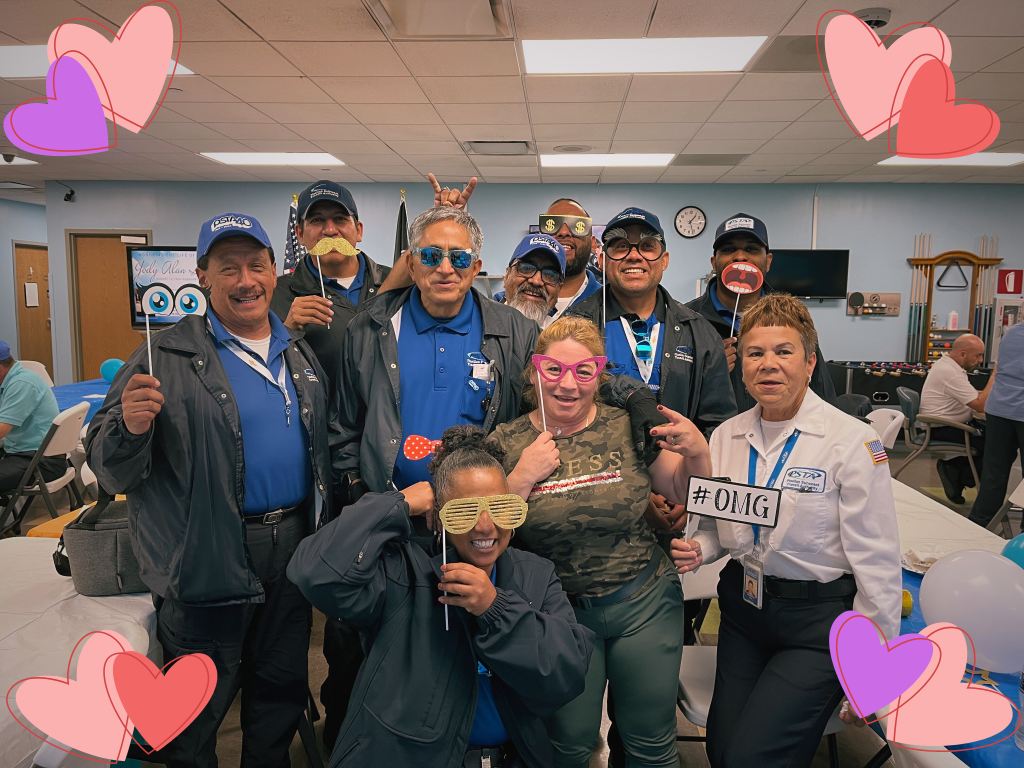
The operations side of PSTA comprises the Transportation, Maintenance, and Mobility departments. But even within those areas, there are core teams who do essential work for PSTA that most people don’t even know about.
So, in honor of the holiday all about sharing with the important people in our lives, we wanted to show our unsung heroes the love they truly deserve. Here are 14 teams we love!
Transportation
Let’s start with the department responsible for ensuring PSTA’s buses and services show up at all. Nested within the Transportation branch of Operations, you’ll find our Bus Operators, our Customer Service Representatives, and our Safety, Security, & Training team. Basically, these are the folks who directly serve the public or train those who do.
1. Bus Operators
In many ways, our bus operators are PSTA. Not only do bus operators drive those huge 30-foot buses you see on the road, but they also provide customer service to riders and ensure their safety every day. Our other name for bus operators is “Customer Service on Wheels.” This is because bus operators are the face of the agency and often answer the same questions our Customer Service Representatives do.
Bus operators must not only operate an enormous vehicle that’s far more complex than a standard car, but they must also give directions to lost riders, answer questions about fares, de-escalate high-stress situations, help riders with mobility aids like walkers or wheelchairs board safely, and know the routes they drive like the back of their hands. Oh, and they have a time schedule to follow too, all while having to navigate traffic and the unpredictability of other drivers.
Needless to say, we love our bus operators. Thank you to each and every one of you for all that you do!
2. Transportation Supervisors
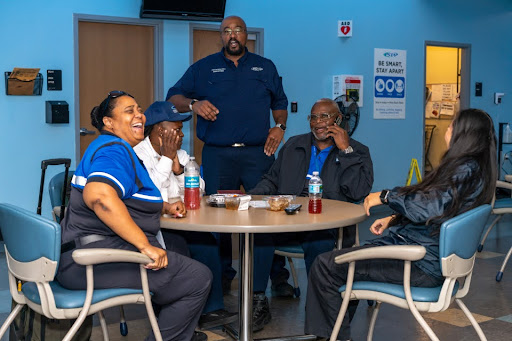
Behind every Bus Operator you see while boarding, there is a small army of Transportation Supervisors ensuring Bus Operators have the information and support they need. In many ways, Transportation Supervisors need to be everywhere at once. They must assign and dispatch buses to their routes, be ready to relieve a Bus Operator who cannot complete their route, determine necessary detours when roads are unsafe or unpassable, and serve as mentors and trainers for Bus Operators under their leadership.
To be a Transportation Supervisor is to be flexible and adaptable. They must have a robust understanding of PSTA policies, emergency protocols, accident investigation and analysis, state and local traffic laws, fare structures and routes, dispatching functions, and possess the leadership skills to be firm but fair with the Bus Operators they supervise.
Needless to say, it’s not an easy job! But they show up every day and give it their all, even during emergencies like hurricanes. For those reasons and more, we love our Transportation Supervisors. Thank you for all that you do!
3. Safety, Security, & Training (SS&T)
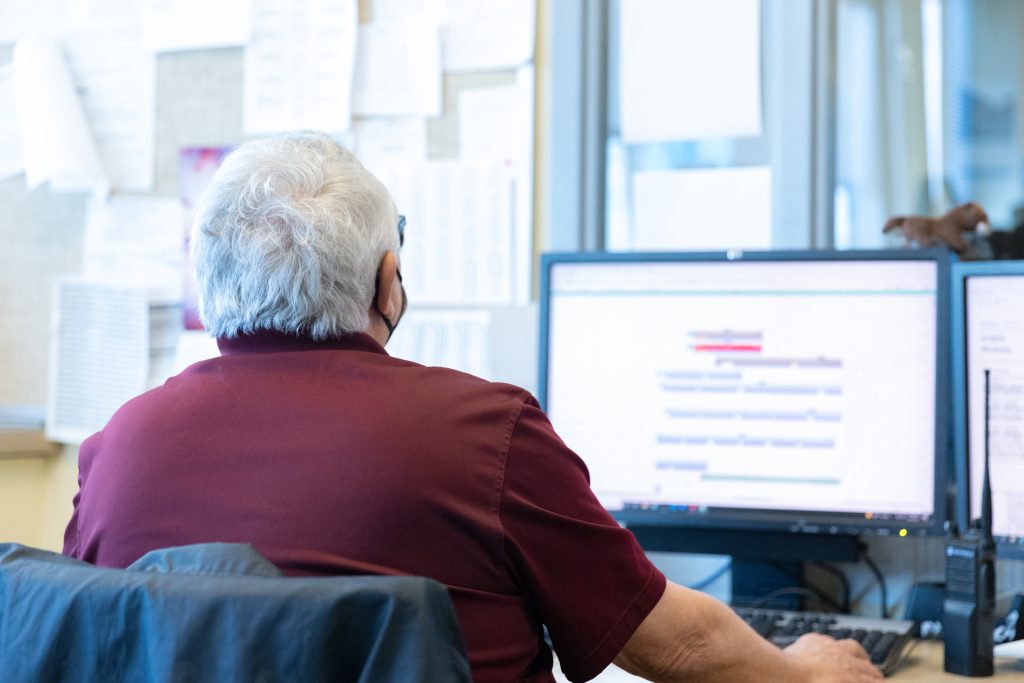
PSTA’s mission statement is to safely connect people to places. And our Safety, Security, & Training or SS&T team ensures we uphold the “safely” part of the mission. From customer-facing employees like Operators and Customer Service Representatives, to Administrative staff at headquarters, SS&T provides guidance and training on how to protect the lives of our coworkers and community members.
SS&T Supervisors administer new Bus Operator training classes and on-site CDL tests, NARCAN training classes, and general safety presentations and initiatives for the entire agency. They also ensure PSTA complies with all state and local traffic laws, as well as maintain the security of all PSTA property. Because the SS&T team possesses strong relationships with local and state law enforcement, PSTA has been able to seamlessly cooperate with authorities during accidents or if crimes take place near buses, shelters, or stations.
Plainly put, without our SS&T team, PSTA would be far less safe in its operations. We love our Safety, Security, & Training team. Thank you for helping increase safety for PSTA and the community at large!
4. Customer Service Representatives
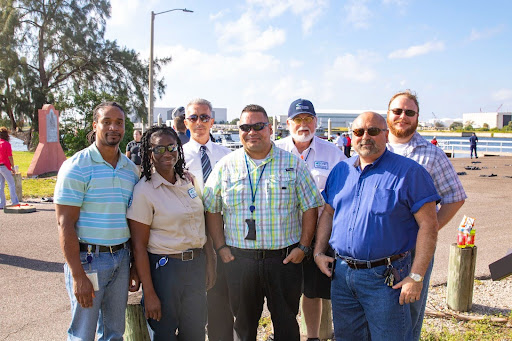
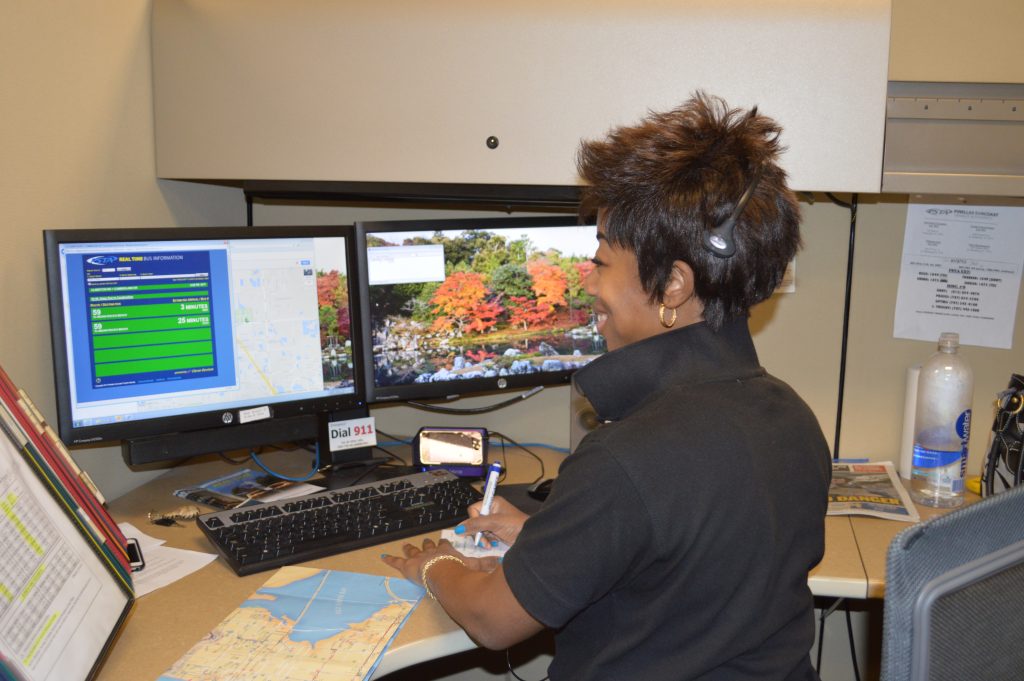
Anytime you call PSTA for information about our fixed bus routes or approach the window at one of our stations or transit centers, chances are you are talking to one of our amazing Customer Service Representatives or CSRs. PSTA’s CSRs work in Pinellas County—there’s no outsourcing here! In order to be a CSR, you must have a vast knowledge of PSTA’s programs and services. From locating a bus or explaining how our services work, to providing information on how to pay your fare or plan your trip, CSRs are PSTA encyclopedias.
With so many people depending on PSTA’s services, many riders also depend on the information CSRs provide. But it’s not just about answering questions and knowing PSTA’s programs and services—CSRs must also be calm and helpful, even when faced with frustrated riders or complex situations. Let’s face it: sometimes people who call or approach the window aren’t always nice, and CSRs often take the brunt of someone’s bad day. But PSTA’s CSRs are steady in the face of negativity, and truly do their best to help.
This is why we love our Customer Service Representatives. We are so grateful for the vital work all of you do!
Maintenance
Now let’s move on to the next branch of PSTA’s Operations Department—Maintenance. This team comprises the hardworking bus and facilities experts who safeguard the condition of our buses, inventory, stations, bus stops, shelters, and our headquarters.
5. Fleet Technicians
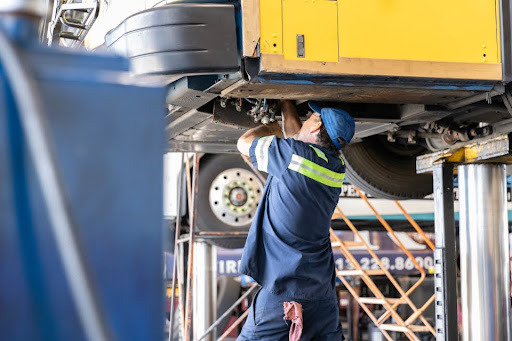
Did you know PSTA performs almost all maintenance of its own fleet, even our electric buses? Enter the Fleet Technicians, three tiers of highly trained bus mechanics responsible for ensuring our entire bus and trolley fleet remains in a good state of repair. Technicians I, II, and III each handle increasingly more complex work, with Technician III employees requiring the coveted ASE (Automotive Service Excellence) Transit Bus Technician certification. In addition to performing maintenance on diesel-powered vehicles, PSTA Technicians must have strong electrical knowledge to work with electrical systems and electric bus batteries.
But it’s not just about repairing and maintaining these complex vehicles; Technicians must also learn comprehensive safety procedures to protect themselves and those around them. And, by extension, Technicians also contribute to the safety of bus operators, riders, and other motorists by ensuring vehicles leave the bus yard in tip-top shape.
Therefore, it’s safe to say that we love our Fleet Technicians. An enormous thank-you to each Technician who helps keep our fleet healthy and safe.
6. Fleet Maintenance Supervisors
Where Fleet Technicians handle the individual repairs of each vehicle, Fleet Maintenance Supervisors look at the big picture. They coordinate bus repairs and maintenance to optimize fleet operations and prevent delays. They assign work to the Fleet Technicians. They enforce safety and quality policies in the shop. They perform quality checks and inspect work rendered by Fleet Technicians to ensure compliance with federal, state, and local laws, regulations, and policies. And they must have strong leadership skills to manage and provide support to Fleet Technicians.
Without Fleet Maintenance Supervisors managing the workflow of PSTA’s shop and the schedule of regular maintenance, buses could break down on the road or be late to their scheduled routes. Because PSTA prides itself on in-house maintenance and closely monitors the condition of its buses, our vehicles can last decades. And this is in large thanks to the hard work of Fleet Maintenance Supervisors who help keep the wheels turning (pun intended).
For that, we love our Fleet Maintenance Supervisors. Thank you for your hard work!
7. Service Attendants
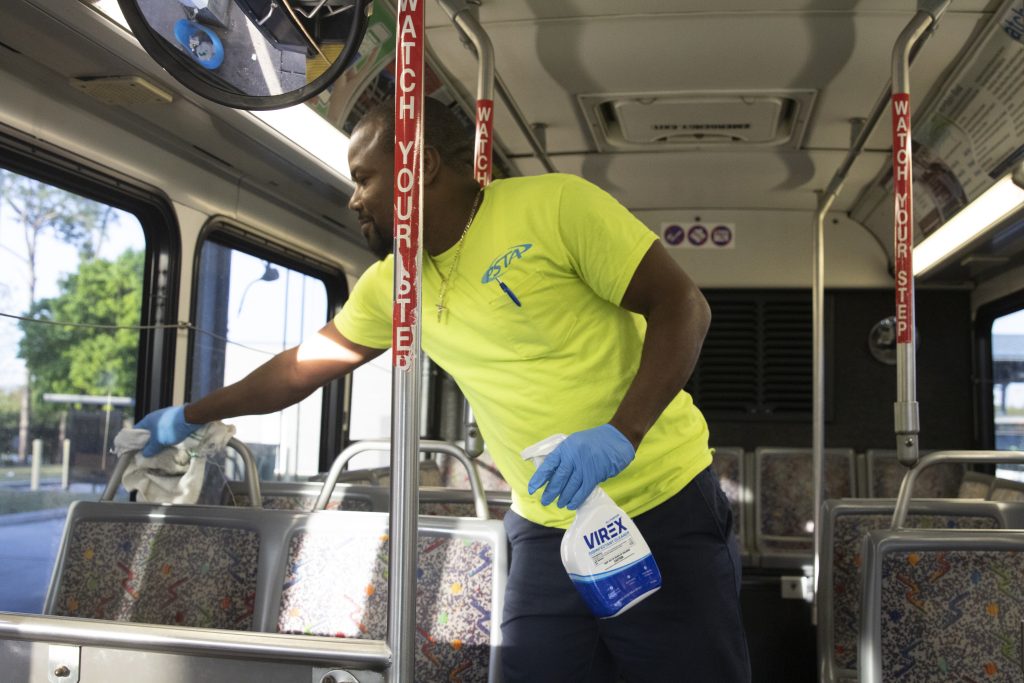
Things can get pretty complicated in a bus yard or outside the maintenance bays, especially with over 200 buses to manage. That’s where Service Attendants help. Not only do they thoroughly clean and sanitize all buses inside and out, but they also top off fluids like fuel, water, and oil, and ensure buses are parked in their assigned locations.
Service Attendants help maintain the condition of buses and ensure vehicles are in the correct locations for Fleet Technicians to perform maintenance and for Bus Operators to begin their shifts. They play an important role in maintaining our fleet and helping other departments do their work.
We see you, Service Attendants, and we love you for all that you do. Thank you for your hard work out in PSTA’s bus yard!
8. Facilities
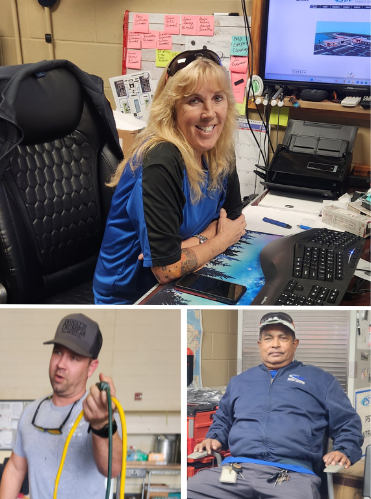
If you’ve been to a PSTA bus stop, shelter, or station, chances are you’ve seen the result of our Facilities team’s hard work and dedication. The purpose of this team is to maintain the repair and cleanliness of PSTA property and assets, both at headquarters and around the county. Some of the many duties under the Facilities team’s purview include janitorial duties of grounds and PSTA properties, amenity installations, landscaping and grounds maintenance, and repair work at bus stops and PSTA facilities.
Facilities is also instrumental in the agency’s hurricane preparedness, particularly in securing the agency’s complex electrical systems, and in removing potential debris at headquarters and out in the community, such as trash cans, benches, and bus shelter parts. The team works around the clock to prepare for the storm, monitor the situation on-site during the storm, and manage clean-up and repair after the storm has passed.
The work our Facilities team does is often unseen, but essential to keeping PSTA’s property safe and clean. And for that tireless work, we love them! Thank you, Facilities team, for everything you do!
9. Inventory Control
In order to perform bus maintenance in-house, PSTA requires an impressive roster of parts and materials. And that’s where Inventory Control comes in! This department is responsible for providing Technicians and Maintenance staff with the requested parts and materials, keeping a careful inventory of all items, and receiving in new orders. At any given time, PSTA will have countless bus parts in its inventory, so keeping them tracked and in the database is no small task.
In addition, Inventory Controllers also receive and process defective parts, returnable cores, and parts ready to be scrapped to ensure sensitive materials are disposed of properly. This team plays a vital role in ensuring Technicians have all the parts they need for critical repairs, as well as managing most deliveries for the entire agency.
We love Inventory Controllers for their admirable attention to detail and the essential support they provide for Maintenance staff. Thank you for everything you do!
Mobility
Last but certainly not least, there’s the Mobility branch of our Operators department. Our Mobility team oversees the operation of our paratransit service for people with disabilities, as well as partnerships with TNCs like Uber and Lyft, and other transportation companies like TransDev, United Taxi, Enterprise, and more.
10. Eligibility
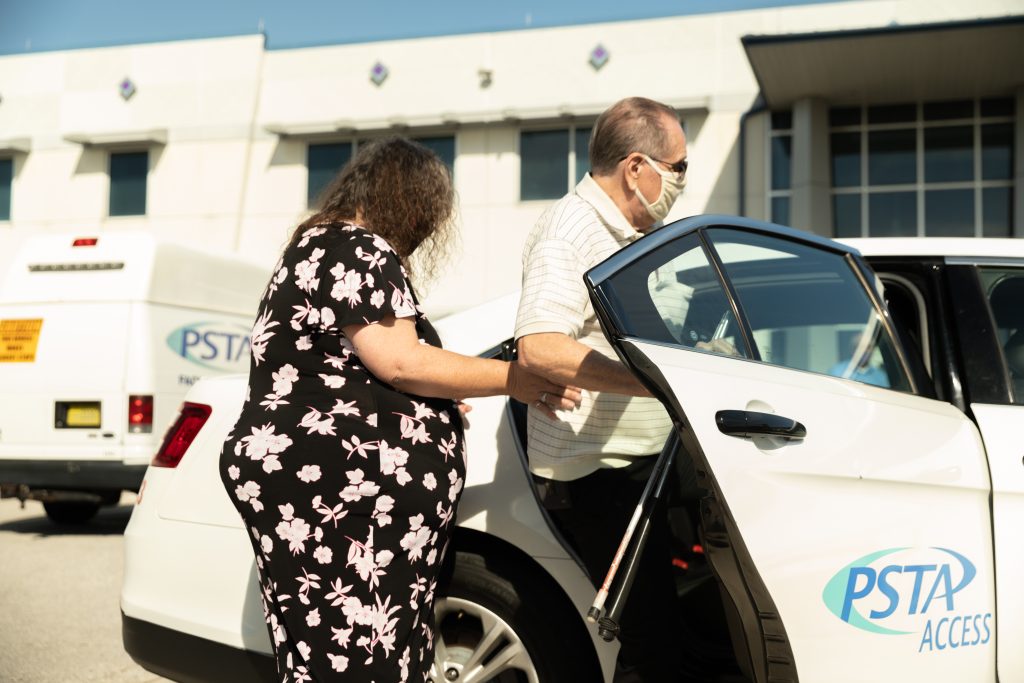
Under the Americans with Disabilities Act (ADA) of 1990, all public transit agencies are required to provide paratransit service for people who cannot ride the bus or trolley due to a disability. This is called “paratransit,” and PSTA Access provides both reserved and on-demand options for riders who cannot ride our ADA-accessible buses.
That’s where our Eligibility team comes in. Mobility & Orientation Specialists within the Eligibility team work with riders applying for PSTA Access to help them determine the best transit options depending on their unique needs. Not only do Mobility & Orientation Specialists assist riders with disabilities, but they also support the Transit Disadvantaged program, which aims to help riders 200% below the poverty line access affordable, reliable public transit.
This team supports some of our communities’ most vulnerable riders, and we love them for the compassionate care they provide. Thank you for helping ensure every rider has the options they need!
11. ADA Compliance
PSTA takes ADA compliance very seriously, not just because it’s the law, but because we provide transit for everyone, no matter their needs. For this reason, PSTA has a designated ADA Compliance Officer, who serves to advise the entire agency on ADA policies and overall accessibility. This is especially important for our paratransit services, where riders with disabilities depend on PSTA to consider their mobility, sight, hearing, and cognitive needs.
PSTA’s ADA Compliance Officer is a vigilant champion for accessibility and ensures every department in the agency not only complies with ADA policy but also identifies potential accessibility issues in new programs and services before launch. Under the careful guidance of our ADA Compliance Officer, the entire Mobility department keeps accessibility at the forefront of all they do.
For these tireless efforts, we love our ADA Compliance Officer. Thank you for being a powerful voice for those with disabilities!
12. Reservation Agents
When a PSTA Access customer calls to book their reserved Access ride or their Mobility-on-Demand ride, they will likely speak to a Reservation Agent. Unlike Customer Service Representatives, Reservation Agents are specially trained to book reserved Access rides with our partners at TransDev or dispatch on-demand rides with our partners at Uber, Lyft, United Taxi, or Wheelchair Transport.
Reservation Agents are also responsible for answering questions about our Mobility programs, as well as providing support for program eligibility for paratransit, Transportation Disadvantaged, and other non-fixed route transit programs. Without this team, vulnerable riders who depend on PSTA to get to work, school, doctor appointments, and more would be unable to easily book their trips.
We love our Reservation Agents and are so thankful to them for helping our riders!
13. Mobility Services Coordinators
Behind the scenes of the customer-facing work of Eligibility and Reservation Agents, there are the Mobility Services Coordinators who ensure the operational performance of PSTA Access, Transportation Disadvantaged, and all other Mobility programs. This team ensures responsiveness to customer inquiries, processes billing, and monitors on-demand trip fulfillment.
In order to continue improving our Mobility programs, PSTA needs this team of experts to monitor and analyze the performance of these programs to prevent lateness, contain costs, and ensure PSTA executes its responsibilities as the region’s Communication Transportation Coordinator for the Transportation Disadvantaged program.
We love our Mobility Services Coordinators for their hard work supporting and monitoring Mobility Programs. Thank you for all that you do!
14. And Even More!
These fourteen groups still don’t encompass the scope of our Operations department! Among these larger teams are the individuals who do critical work to support and inform the Chief Operating Officer and the rest of the agency—Directors, Deputy Directors, Superintendents, Supervisors, Assistant Supervisors, Managers, Administrators, Analysts, and Administrative Assistants. So to all of those individuals, we love you, too! We see you, and we are so grateful for what you bring to the table to help the mission of PSTA.
Happy Valentine’s Day!
As Bob retires after an impressive tenure, we celebrate the role he’s played in PSTA’s public engagement and communication over the past two decades.
If you’ve been on a PSTA bus or attended an event we’ve tabled at in the past 21 years, chances are you’ve seen the friendly face and heard the resonant radio-ready voice of Bob Lasher. Over the years, he has become a trusted and familiar presence for our riders, and after two decades of dedicated service, he is entering his well-deserved retirement.
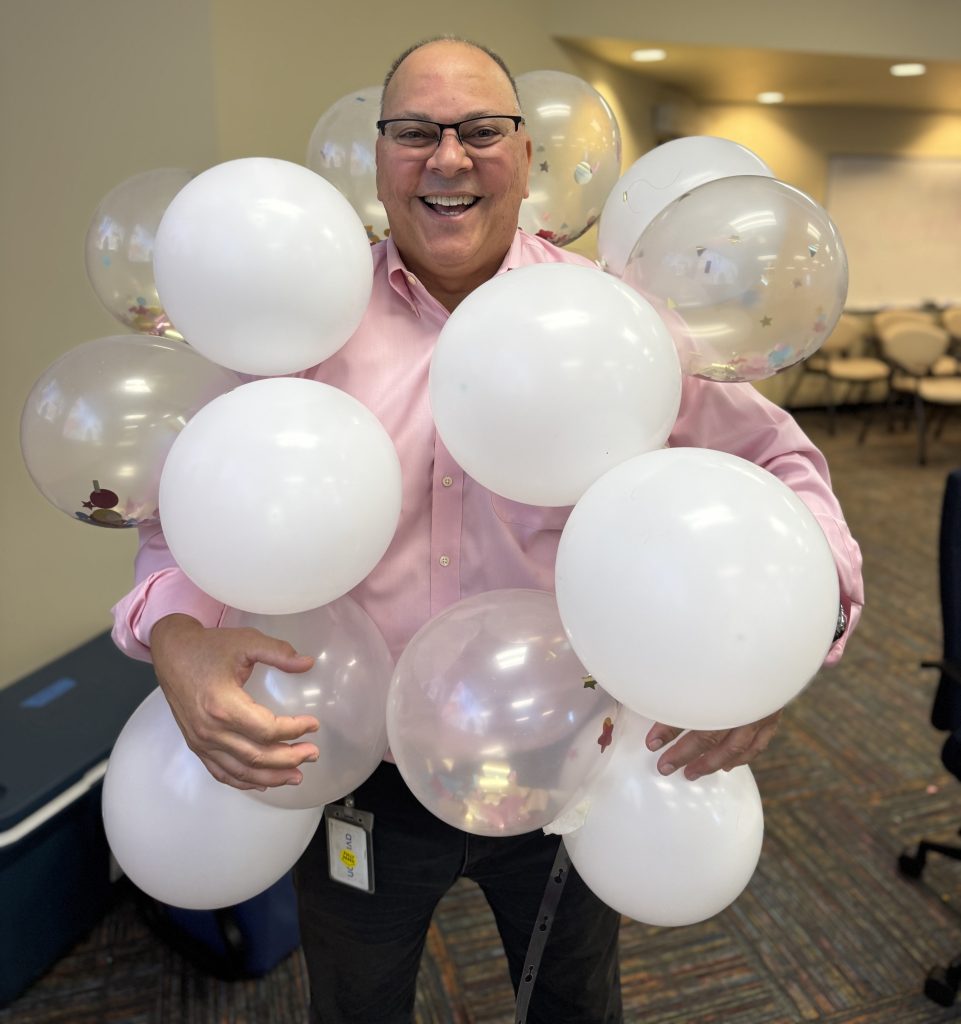
Thus, for this entry of our Behind the Wheel series, we will highlight Bob’s tireless work in transit and give him the send-off he deserves!
Bob Lasher’s Career
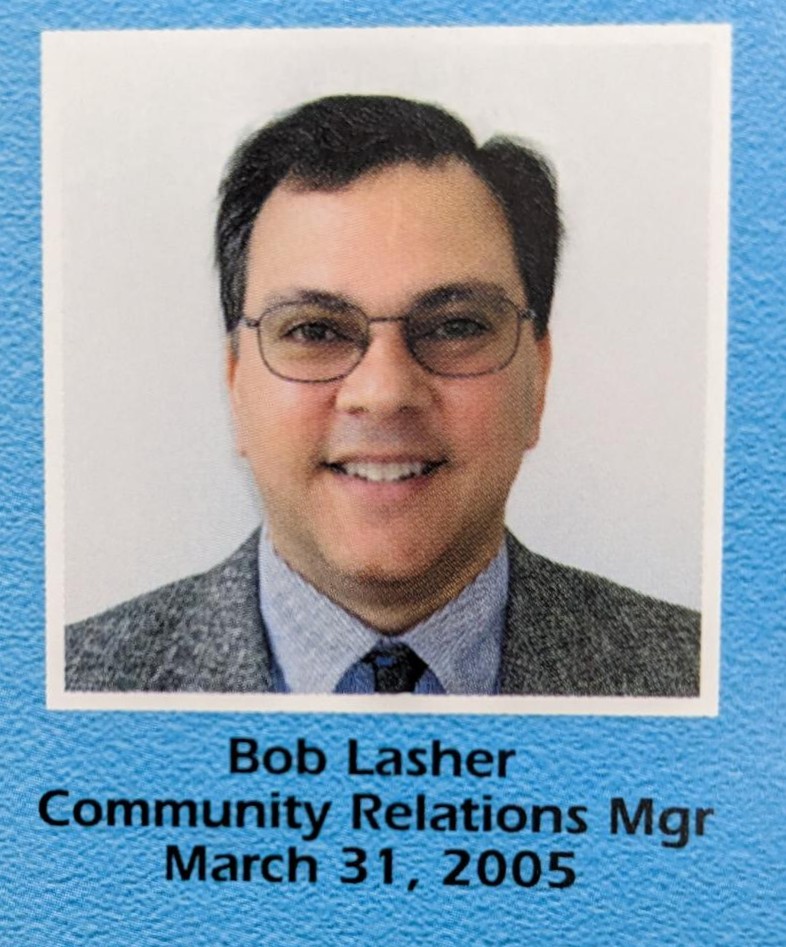
A man of many talents, Bob had quite a diverse career before joining PSTA on March 31st, 2005. Back in the 80s, he began in television, most notably with WTOG Channel 44, where he served as a writer, a producer for evening broadcasts, and filled in as a weather anchor as needed. Upon leaving the Tampa Bay Area, Bob continued his TV work as a news anchor, reporter, writer, and producer at various stations in Georgia and California, and eventually landed in Secaucus, New Jersey.
While living in New Jersey, Bob expanded his skill set and worked as a copywriter, computer network administrator, salesman, and public speaker. With such a wide variety of experiences, many in the realm of communication and marketing, it only made sense for Bob to secure his position as Community Relations Manager at PSTA after returning to the Tampa Bay Area. His robust background perfectly positioned him to take on a public-facing role advocating for a cause he truly believed in—the importance of public transit.
He hit the ground running, quickly building relationships with not only local community leaders but also riders. Throughout his tenure at PSTA, he spoke at Rotary clubs, Kiwanis clubs, HOAs, and many other civic organizations. His warm, engaging voice and friendly, informative demeanor established a sense of trust with the community. People began to associate Bob with PSTA itself. His charisma and genuine passion for public service truly embodied the sentiment all PSTA staff share: the desire to serve the community and support those who depend on our services.
Having worked in radio while in college, he put that soothing on-air voice to work by recording on-board bus announcements and informational messages for riders who called our InfoLine. Soon, he wasn’t just the face of PSTA for those who attended his presentations—he became the voice of PSTA, heard by every single person who boarded a bus.
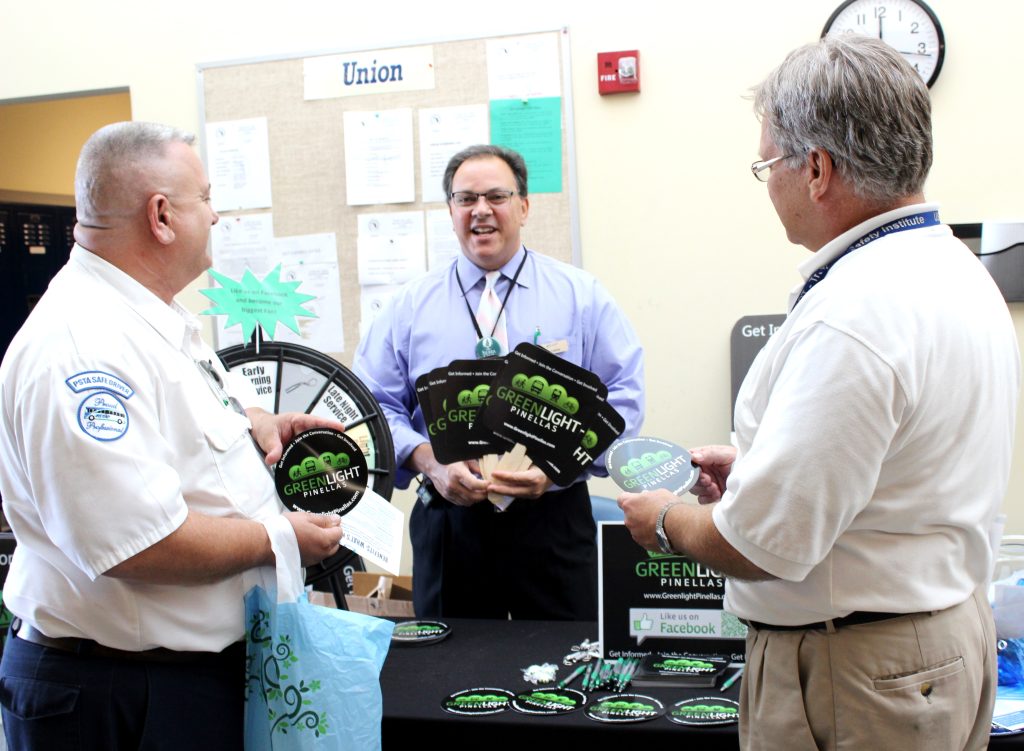
With each new service or initiative PSTA embarked upon, Bob Lasher was at the forefront of communicating and advocating for it. As a Public Information Officer (PIO), he coordinated with local media and wrote press releases. He worked part-time for FEMA, teaching PIO courses, particularly those related to disaster response, and assisted with training for Southeastern Guide Dogs. He also became PSTA’s fact-checker and researcher, carefully documenting the truth of PSTA’s history and track record. Bob’s loyalty to PSTA’s mission and his passion for telling the agency’s story made him a staunch defender of the facts when faced with misinformation. A prime example of this is his well-known “Busting the Empty Bus Myth” video.
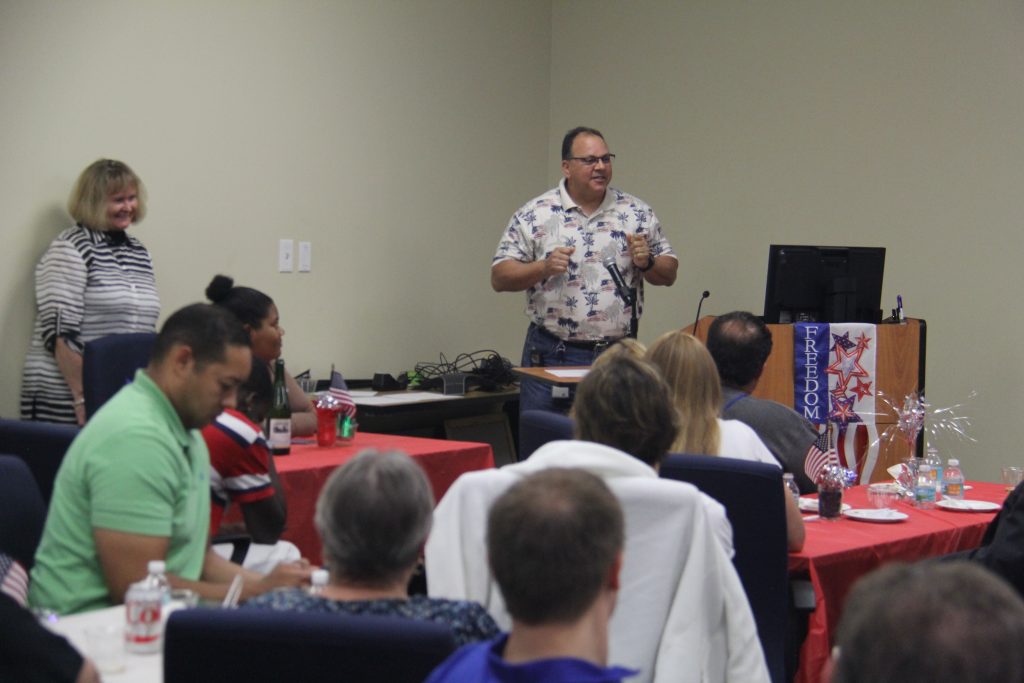
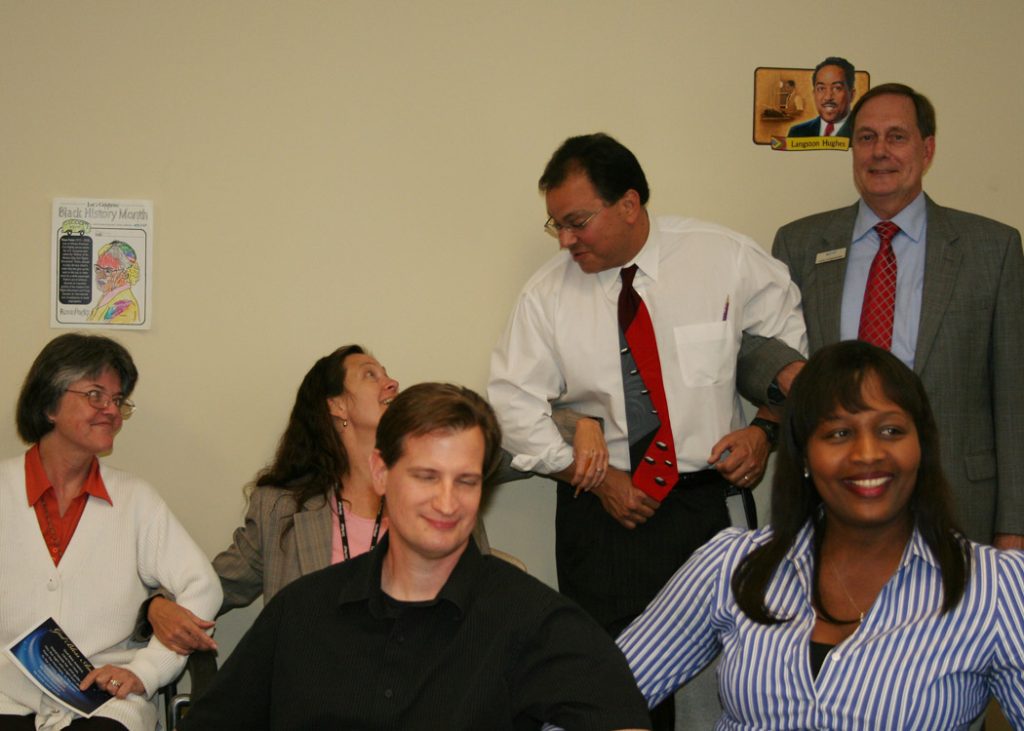
As PSTA expanded its media relations, Bob shifted his focus solely to community outreach, a role in which he excelled. He truly listened to rider feedback, a pursuit that led him to the formation of the Transit Riders Advisory Committee (TRAC).
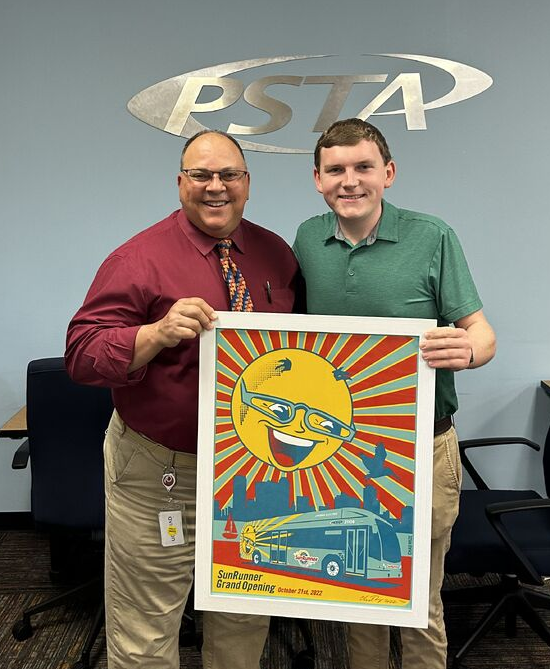
The Committee comprises members of the public who represent the diversity and geographic distribution of Pinellas County residents, all of whom are daily or weekly PSTA riders. TRAC provides a valuable rider perspective for PSTA staff and serves as a focus group for presenting upcoming projects and services. Over the years, Bob has guided TRAC member discussions and simplified complex transit topics into digestible, accessible information. It was under Bob’s attentive leadership that TRAC flourished into an essential advisory group for the agency.
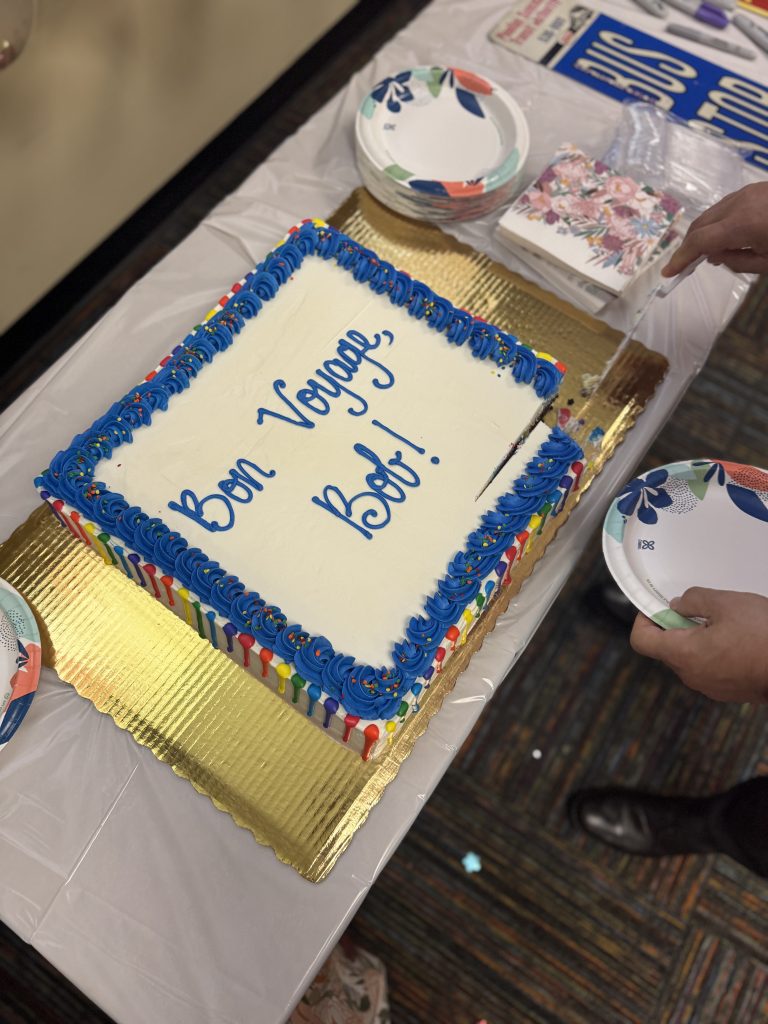
Through the ups and downs of the past two decades, Bob has remained tireless and dedicated to his work, lifting spirits with his quick wit and bold sense of humor. Even after his retirement date was set, he dutifully attended community events and engaged with riders with the same exuberance and care he brought to PSTA in 2005. His retirement celebrations were full of tight hugs, fond memories, and warm wishes. It goes without saying that, while he will be sorely missed in the halls of PSTA, those he worked with are excited for him as he enters retirement to focus on family, hobbies, and travel.
But don’t take my words for it—let’s hear it directly from his co-workers and friends!
From Bob’s Co-Workers
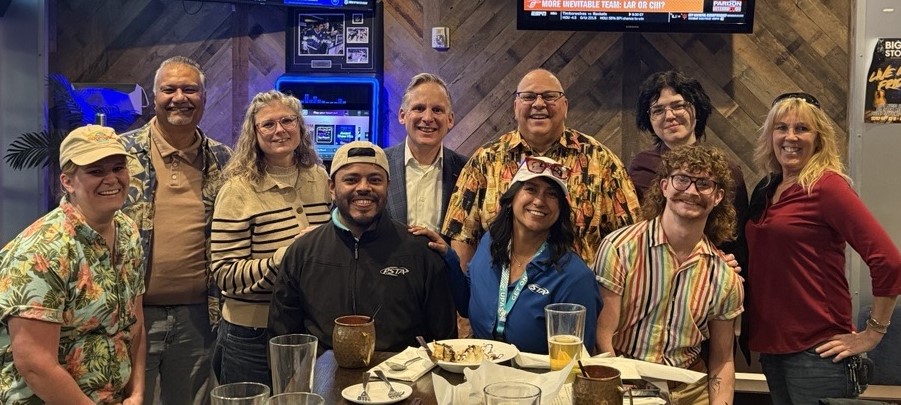
Here are some of the folks who worked with Bob on the daily and saw his dedication and passion firsthand.
Brad Miller, Chief Executive Officer
When I came to PSTA in 2011, the first time I heard Bob’s voice was on the bus. I knew right away that he was undoubtedly the voice of PSTA. One of my first objectives as CEO was to get out into the community and attend local meetings—everyone I spoke to knew Bob! From Tarpon, all the way down to Gulfport, long-time Pinellas people knew Bob Lasher as the face of PSTA, and as the voice of PSTA.
Over the many years of working with him, his loyalty to PSTA and work ethic have been outstanding. He has always been our biggest defender and an excellent representative for us in the community. His passion for his work has never waned. He has also served as an excellent leader for TRAC, a group that has played a critical role in the development and improvement of PSTA’s services.
Even after two decades of doing this, I still walk up to Bob at community events and am amazed by his excitement. I remember talking to him at the PSTA table at Localtopia last year, and he looked over the moon with the response he’d received from people who’d come up to the table to tell him how much they loved PSTA, the SunRunner, and all the programs we offer. On the cusp of retirement, he still cared so much about his work. There has not been another person like Bob for PSTA. He is truly one of a kind.
I wish him the very best as he enjoys retirement. He has more than earned a chance to relax and enjoy the fruits of his labor.
James Bradford, Chief Operating Officer
I first arrived at PSTA in early 2013, a new executive from out of state. With that fresh perspective, you quickly notice the influential figures within an organization, and Bob Lasher rose to the top almost immediately. He has such a steady presence and a deep institutional knowledge. The way he carries himself and that wealth of wisdom he has… you can’t help but trust his perspective. I often thought of Bob as PSTA’s “oracle,” a grounding force who understands how history should inform and guide our progress.
Another thing that stands out to me about Bob is his rich baritone voice. I always thought I had a pretty good voice until I heard Bob and realized his was better. It’s obvious why he is the voice of PSTA, announcing bus stops and other messages. There is instant recognition for our riders. Recognition and trust.
Bob isn’t just a voice, though—he is the perfect external representative for PSTA. He has an exceptional talent for explaining who we are and how transit works in plain language that riders, stakeholders, and partners could actually understand. He never talked over people or relied on industry jargon. He translated complex operations and policy into something accessible, which built trust and credibility across the county.
Early on, I was doing a lot of media for the first time, including on-camera interviews with an aggressive investigative reporter. Bob and I co-led at least two or three of those interviews, and Bob’s background in news media really showed. He understood reporters’ tactics, framing, and where questions were likely to go. Before each interview, he would calmly walk me through what to expect so I could focus on delivering a professional, composed response rather than getting rattled.
Because Bob and I worked in different buildings, I probably didn’t say this to him as often as I should have, but I’ve always had a deep appreciation for him and his integrity. But better late than never! Bob’s impact on me personally, and on PSTA as a whole, is something I’ll always be grateful for as he enters retirement.
Debbie Leous, Chief Financial Officer
When I think of Bob, I consider him to be the voice of PSTA. Soothing and comforting. Bob has such a great reputation around the community, and when I talk to others, they instantly equate Bob with PSTA. He has been great to work with, and I will miss working with him greatly. There will be no other like him…
Cassandra Borchers, Former Chief Development Officer
Bob has an amazing heart and spirit. He truly cares about PSTA, his co-workers, and the riders. I could always count on Bob to be the first person to volunteer for a public engagement shift. Day, nights, or weekends, Bob was on-duty! He was a trustworthy spokesperson for the agency, an admired ambassador to community partners, and the soothing “voice of PSTA.”
Amanda Baird, Director of Communications and Marketing
Bob Lasher was a fixture at PSTA for 21 years, and his influence is indelible. His loyalty was always to the agency’s mission, above all else, and he worked consistently to advance that mission. Whether speaking to riders at community events, TRAC meetings, or as the “voice” of onboard announcements, in his tenure, he always made sure that our riders heard the latest on all things PSTA—and that their voices were heard when our planning team designed our routes and services.
Shahadah Hameed-Thomas, Superintendent of Customer Service
I’ve had the pleasure of working with Bob for many years, and he has always been such a welcoming and truly kind presence at PSTA. From the very beginning, he made me feel comfortable, and over time, we built a great working relationship that always felt easy and sincere. Bob consistently asked about my husband, and it was never just small talk. He genuinely cared, always spoke highly of him, and never missed an opportunity to check in. That kind of thoughtfulness really says a lot about who Bob is.
Professionally, Bob is truly one of a kind. He is the voice of PSTA, from the InfoLine recordings to onboard messaging, and his calm, steady delivery has always stood out. Every holiday or schedule change, I could count on Bob to jump right in and flawlessly update our Customer Service recordings. He always knew exactly what was needed and delivered it perfectly every time.
I also had the opportunity to work alongside Bob on outreach and marketing efforts, and he was always a pleasure to collaborate with. He is approachable, relatable, and thoughtful. Bob is someone I don’t just consider a colleague, but a friend, and he will be deeply missed.
His professionalism, talent, and genuine care for both his work and the people around him have left a lasting impression. There is truly no replacing him, or that iconic voice, and I wish him nothing but happiness and fulfillment in his well-earned retirement.
Best wishes to Bob always! ❤
Stephanie Weaver, Communications & Public Relations Manager
Bob has been a steady voice in the communications and marketing department since my arrival at PSTA in 2019 and way before that. He always kept things light-hearted and always kept the riders’ best interests at the forefront of every conversation we had about our services. We will miss his wisdom and his kindness, and I know that there will be a big Bob-sized hole at the agency. But we wish him the best in retirement and hope he enjoys living his best life away from a desk!
Jacob Labutka, Planning Manager
To say the least, Bob is a PSTA Institution. He left his mark on transit in Pinellas County by helping thousands of riders navigate service changes over two decades, especially during the massive change that was the Connected Community Bus Network. Bob also built relationships with organizations across the county that were instrumental in launching new services and gaining support for successful grant applications. You could always rely on Bob to provide a warm and calm presence in meetings and conversations. Bob Lasher—the man, the historian, the Hawaiian shirt collector—will be missed and remembered at PSTA for years to come.
Raj Singh, Assistant Manager of Schedules
Bob has served as Public Outreach Manager and, for decades, has been one of the most recognizable and trusted connections between PSTA and the community.
I’ve had the privilege of working alongside Bob for the entire 21 years I’ve been at PSTA, in many different capacities—from TRAC meetings to public engagement events and major systemwide initiatives. Through it all, Bob was consistently focused on one thing: making sure the public was informed, respected, and truly heard. He had an exceptional ability to take complex transit plans and turn them into clear, accessible information that people could understand and trust.
Bob built strong, lasting relationships with local governments, community organizations, and advocacy groups. Those relationships mattered. People knew Bob, trusted him, and understood that when he spoke, he did so with honesty and integrity on behalf of PSTA. He also served as PSTA’s representative at the Emergency Operations Center during hurricane events, providing steady leadership and coordination during critical moments.
For many years, Bob was quite literally the voice of PSTA. From onboard stop announcements to public service messages and phone system recordings, his voice became familiar to thousands of riders across our system. It’s something many people may not realize, but it’s a lasting imprint of his work and dedication.
Bob is a genuinely caring person, and his commitment to public service has always met the highest standards. I will truly miss working with him, but I am grateful for the years we worked together and the example he set for all of us.
Bob, I wish you a very happy and well-deserved retirement. Thank you for everything you’ve given to PSTA and to the communities we serve. It was truly an honor working with you, Bob.
Gabrielle Donaldson, Coordinator of Special Projects
I really enjoyed my time working with Bob. He makes an awesome eggplant parmesan, and he has a great sense of humor. Every year on Bob’s birthday, we would pull out this funny card that we attached his face to, and everyone would just die laughing, including Bob. We had a lot of fun working together—I miss those days!
Juan Luvian, Public Engagement Planner
There will never be another person like Bob at PSTA. He is such a hard worker. His work ethic and passion will always stay with me, especially during Greenlight. He would work from 5am until 10pm, then wake up the next day and do it all again. For a year or two, he dedicated his life to the referendum and really wanted to see public transit improve in Pinellas County. Although it didn’t pass, his hard work was never forgotten, and the relationships he strengthened for us live on today.
He’s so knowledgeable about politics and what’s going on in the community, whether local, state, or federal. He knows what’s happening and how it will affect us, which has always been a valuable tool for PSTA.
Thank you, Bob, for so many fun years of doing public outreach. It will be weird not seeing your signature 1990’s Miata convertible in the parking lot or enjoying your delicious popcorn. You’ve made a lasting impact on PSTA, and we are grateful for your time and dedication. Good luck in your retirement!
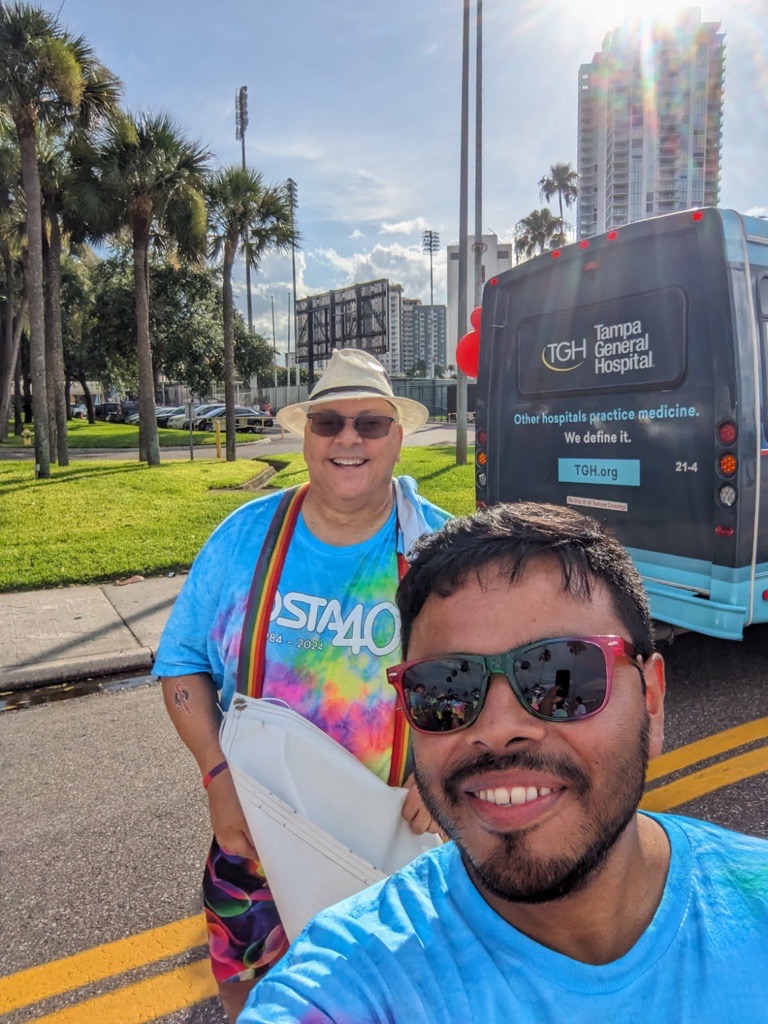
Amanda Boisen, Communications Specialist (and Writer of this Blog)
It is with great care that I write this, because Bob Lasher is a copywriter and someone I really look up to. During my three and a half years at PSTA, Bob has been a fount of knowledge. From PSTA history to local, state, and federal politics, he has always been an invaluable resource for my research projects and my intense desire to learn everything I can get my grimy hands on.
Last summer, when I took on the tall task of compiling a full history of public transit in Pinellas County, he was my personal PSTA encyclopedia as I sifted through old photos and documents from our archives. Bob was long considered the designated PSTA historian, so I tried to absorb as much of his wisdom as I could. In many ways, it feels as though he’s passed the torch to me now, and I carry it with a great respect for all the incredible work he’s done over the past two decades.
On a personal level, Bob is a great friend, has a wicked sense of humor, and, perhaps most notably, is a fellow avid Star Trek fan. We’ve had so many insightful conversations about everything from politics and current events to music and movies. The man has great taste and has recommended so many great pieces of media for me to dive into. I’ve always really valued his perspective on things, and he’s put my mind at ease many times over the past few years when the stress of work and life became overwhelming. He has always been an enthusiastic cheerleader for the writing I’ve done for PSTA, including the work I did on PSTA’s new jingle and music video. That level of support means the world to me.
Bob, thank you for all the wisdom you imparted to me. Although you won’t be just a few steps away from my desk anymore, I know you’ll be one message away. After all, who else will send me the best Star Trek memes? I wish you the very best as you settle into retirement!
In this second installment, we cover the creation, training, branding, outreach, and event planning for new services!
Earlier this year, we talked all about the first steps PSTA takes when launching a new service in Deep Drive: How We Launch New Services (Part 1). We covered everything from where ideas come from to ironing out the details to finding the funding to execute them. Now, we’ll dive into the ways we schedule the service, train our staff, reach out to the public, brand the service, and plan the launch event!
Building the Schedule
With funding secured and a stamp of approval from PSTA’s Board of Directors, it’s time to actually schedule the service. That’s where PSTA’s Scheduling team steps in. Working in concert with the Planning team, PSTA’s Schedulers use a number of transit programs to help them create the route, build the individual trips, determine the number of vehicles required, and plan how the vehicles will block together.
First, the team plans the service in a program called Remix, a map-based software saturated with vital demographic and geographic data to create a better understanding of who the service will benefit. This visual, intuitive tool is essential for ironing out the fine details Scheduling needs to generate the robust timetables and spans of service you see in schedules today.
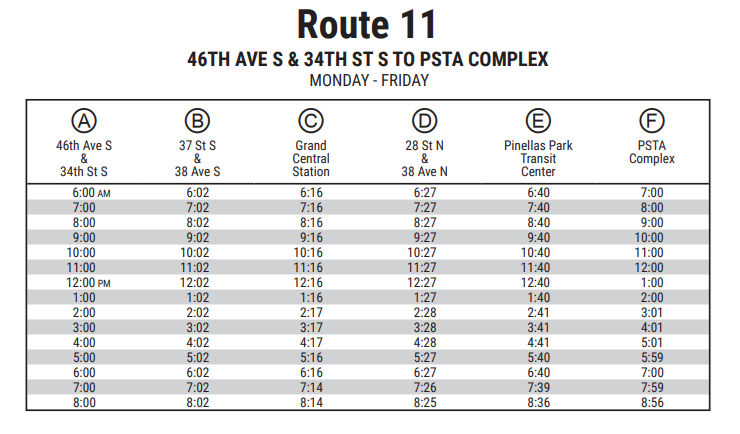
Another important program Scheduling uses, Hastus, allows the team to build those aforementioned timetables and vehicle schedules, as well as assisting with budgeting, contracting hours, and the miles anticipated. However, even with the assistance of these two programs, this work is extremely time-intensive.
“I can easily work 60-hour weeks trying to get everything done,” PSTA’s Manager of Scheduling Christine said. “But it doesn’t feel like work. This is what we love to do.”
Once the roster is ready for export, it’s input into PSTA’s Computer-Aided Dispatch (CAD) and Automatic Vehicle Location (AVL) system, Clever, as well as the agency’s other legacy systems. When this process is finally complete, the information is passed off to the Marketing, Outreach, and Safety, Security, & Training teams to begin their work.
Training Begins
Safety, Security, & Training (SS&T) play a very important role when it comes to new services—ensuring what’s on paper is feasible on the street. No one knows Pinellas County streets like our SS&T team. With turn-by-turn routes in hand, the SS&T team hits the road to make sure vehicles can safely make their turns without impeding traffic or endangering the safety of other cars and pedestrians. With any needed tweaks made and the blessings of SS&T, the next step is to train the operators.
The team will teach bus operators how the new service will work, where it will operate, and provide turn-by-turn directions to follow. Operators who are unfamiliar with the routing are encouraged to drive the route in their personal cars to get accustomed to the turns, landmarks, and things to look out for.
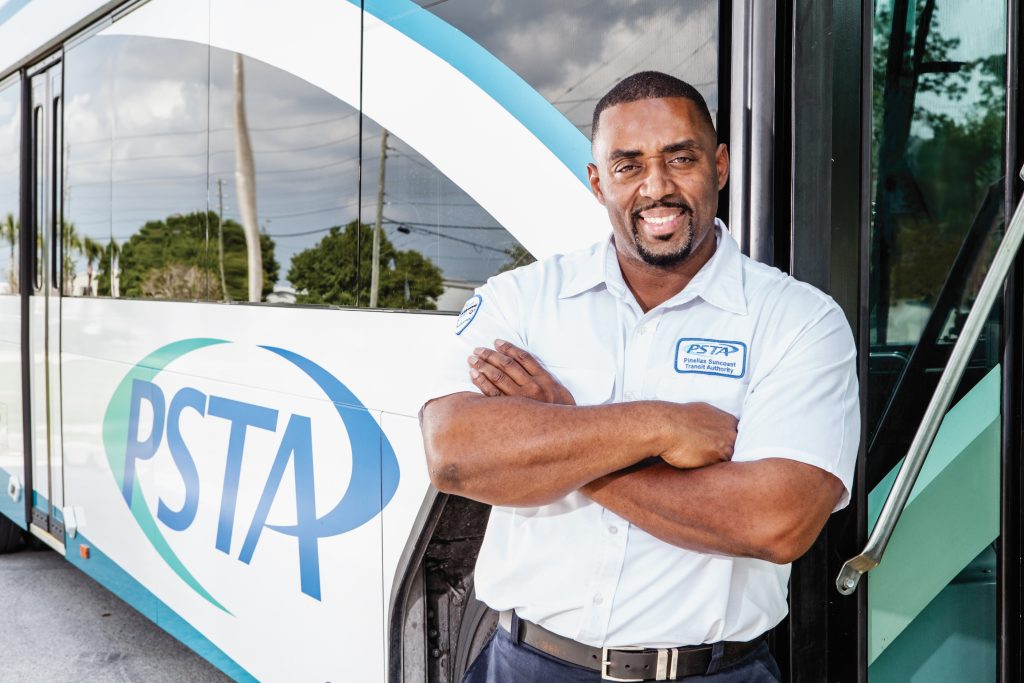
When launch day finally arrives, it’s all hands on deck for SS&T, as well as for the Transportation Supervisors. Many of these folks will be patrolling out in the field to help with any issues. Should any wrong turns occur, there is plenty of support to help operators get quickly back on track. Hey, who hasn’t made the occasional wrong turn?
Even after the launch of the service, feedback and improvements remain ongoing.
“My most sacred task is to take stories and anecdotes from the operators and turn them into change. Things like, ‘Hey, this turn is too tight.’ Not everyone has the same experience, so it’s important we hear from everyone,” Safety, Security & Training Supervisor Eddie Kester said.
Branding
So, the service now exists in PSTA’s internal systems, and staff have been trained on how it will operate. But how will anyone use the service if they don’t even know its name? That’s where the Marketing department comes in.
Once a new service is greenlit, Marketing will begin working on concepts, moodboards, color swatches, and lists of brand names, even before Scheduling completes their work! Over the course of months or weeks, the Marketing department will whittle their big ideas down into a cohesive, exciting brand treatment. Sometimes, Marketing will also employ the talents of artists outside of the agency, like in the case of SunRunner.
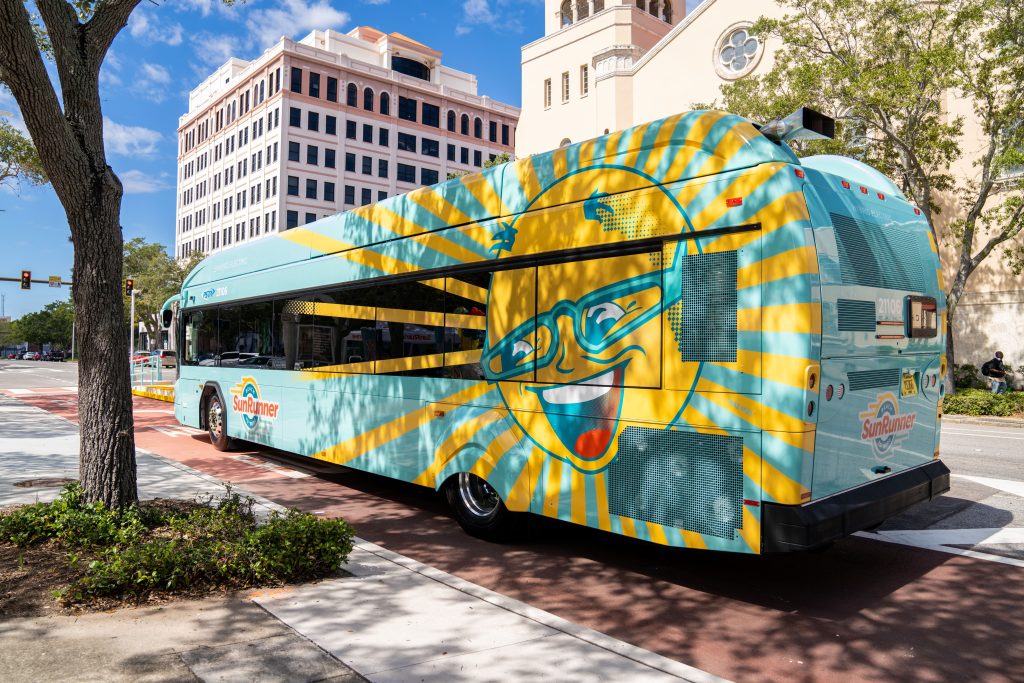
During the brand development of SunRunner, PSTA collaborated with local artist Chad Mize to create a bright, eye-catching design to make the new Bus Rapid Transit service stand out. Chad chose to pay homage to St. Petersburg’s iconic Mr. Sun mascot, created by photographer and artist Jack Swenningsen for Griffin Advertising in the 1940s. He had already created an incredible mural updating Mr. Sun in the alley behind 645 Central Avenue North in 2014, so he brought that design over to the SunRunner—it only made sense considering the name!
From there, PSTA’s Marketing department ran with the concept and developed a robust set of color swatches, assets, logos, bus wraps, and print and digital materials to introduce SunRunner to the public. Since the launch of the bus service, SunRunner’s branding has won national awards and earned the envy of transit nerds and riders across the country.
Outreach
As Marketing begins advertising the new service and SS&T ensures operators are trained, the Outreach team begins their plan to educate the public about the benefits of the service and how to use it. They start by learning how the service will work, if it will affect or connect with other routes, and what areas and demographics it will serve.
With this information, Outreach can develop a strategic plan of locations and communities to reach out to. Such efforts might include tabling at events or terminals, riding specific routes to speak with riders, or providing presentations to civic organizations, including Rotary clubs, Kiwanis clubs, HOAs, local chambers of commerce, and public information officers at various municipalities.
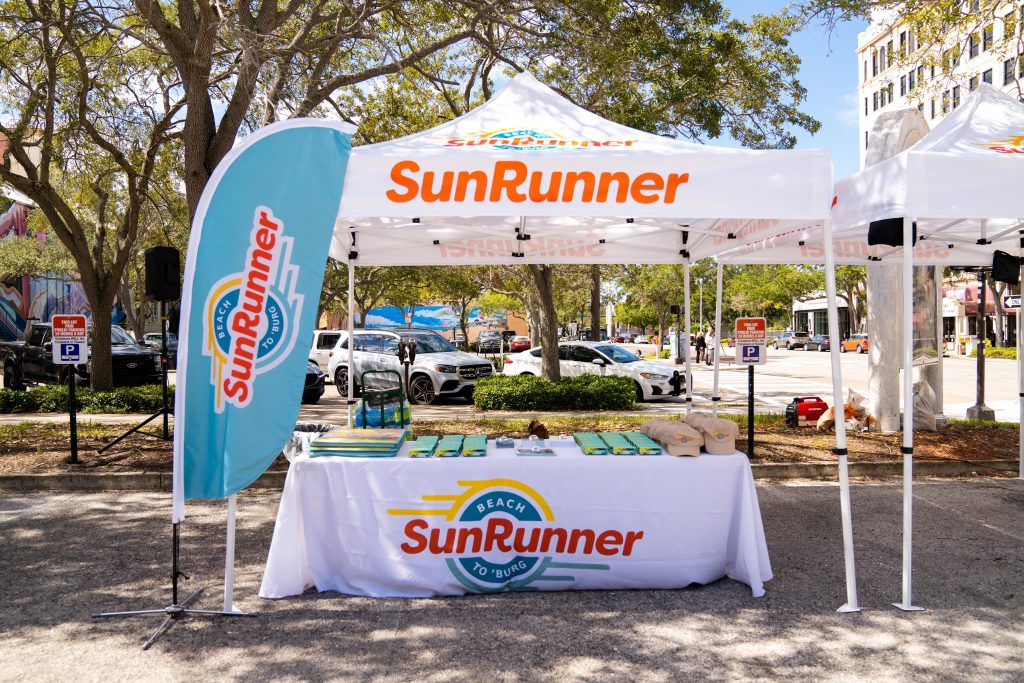
From there, the team works backward from the launch date to determine the phases of outreach necessary. At minimum, they will begin two weeks before launch and focus heavily on the week of the launch. For larger changes, they might start a month in advance. In the case of PSTA’s recent system redesign, the Connected Community Bus Network, outreach began two years beforehand. As the new network details were finalized this past year, outreach began in earnest in the spring, and then intensified 6 weeks leading up to launch day, including a week after to ensure people had the information they needed.
Outreach is a vital part of PSTA’s efforts to inform the public, as not all riders have access to social media or ride often enough to see print signage. The team is specially trained to communicate with folks of all walks of life and is armed with resources to help riders learn about other PSTA services and programs.
Media and Event Planning
Finally, the service is ready to be officially launched! And PSTA is known for putting out new services with an exciting launch event. These launch events are a chance for PSTA staff, community supporters, and stakeholders to celebrate the culmination of years of planning and hundreds of hours of work, and drum up excitement for folks to try out the new service.
Leading up to the launch, the Communications wing of the Marketing department will develop a media and event strategy. A location is chosen and coordinated with the Facilities team to ensure any materials are brought onsite and set up, such as tents, tables, chairs, easels, and a lectern for leaders or officials speaking at the event. Next, members of the Marketing and Facilities teams will conduct an on-site walk-through and map out where items will be placed. If any buses are needed for the event, Marketing will coordinate with the Operations team to arrange a vehicle to be present for the launch.
Launch events often include other fun elements such as confetti canons, live music, food or dessert trucks, and, most importantly, a ceremonial ribbon-cutting. It’s a great way to symbolize the start of the new service, especially when the bus itself cuts the ribbon like our SunRunner and Spark launches.
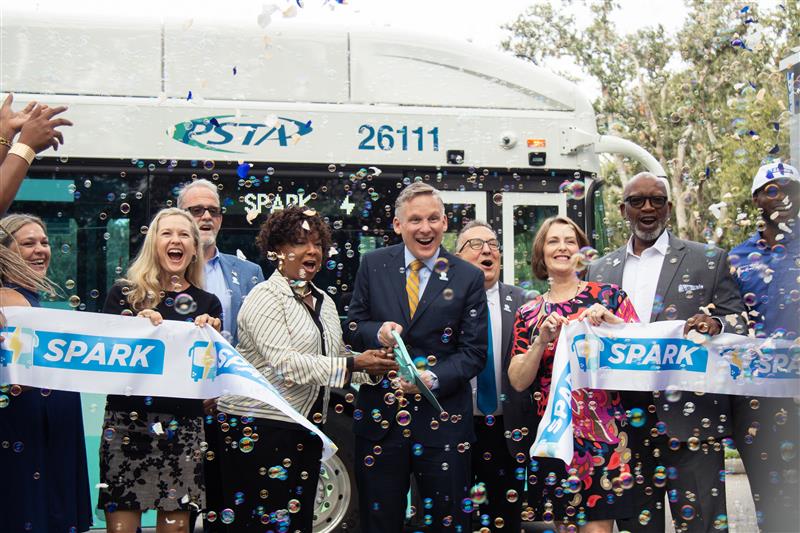
Spark Ribbon Cutting Event
Weeks before launch day, Marketing designs and orders branded promotional items to be given out at the event as keepsakes. For example, some of Spark’s launch event promo items included water bottles stylized like an electrifying energy drink, light-up frisbees featuring Spark’s lightning bug mascot “Sparky,” locally made candles and branded matchboxes, and stylish sunglasses to tame the Florida sunshine.
Some service launches will feature ridealongs for attendees, giving them an opportunity to experience the service firsthand—both SunRunner and Spark launches have featured these ridealongs.
Two days before the event, media advisories are sent out to traditional media outlets. Inviting media to these events is an important component of the agency’s overall marketing and outreach efforts, as it broadcasts the service’s features to millions of viewers across the county. Even in our digital world, many still rely on traditional media to get their news!
News media and social media efforts continue long after launch to advertise the new service and keep the momentum rolling along. And you can count on PSTA to always celebrate milestones like the one-millionth rider and each anniversary since launch!
Always Something New
The process detailed here and in part one is the result of four decades of experience launching new services in Pinellas County and learning from other transit agencies across the nation. Each new transit project is the result of the blood, sweat, and tears of countless hard-working transit professionals and supporters who are committed to providing new transportation options to their community.
And more services are coming down the pipeline! PSTA is currently hard at work relaunching the ferry service between St. Petersburg and Tampa. The agency is also looking at a potential transit option along the Alternate 19 corridor. And not to mention the new Clearwater Station, soon to begin construction! As you can see, PSTA is always looking ahead to launch new services and keep the wheels of public transit in the Tampa Bay Area rolling.
We’ll catch you at the next launch event for a new PSTA service!